Horse Owner’s Guide to Wildfire Disaster Preparedness
As a horse owner, having a plan in place for emergency situations is crucial. Wildfires can be devastating, and being prepared is key to ensuring the safety of both you and your horses. With the increasing frequency and severity of wildfires, it’s essential to take proactive steps to protect your horses and properties.
Emergency preparedness is not just about having a plan; it’s about being ready to act at a moment’s notice. For more information on how to prepare, you can call 877-600-1375 or visit https://equestrisafe.com/.
Key Takeaways
• Understand the risks associated with wildfires and their impact on horse owners.
• Learn the importance of having a comprehensive emergency preparedness plan.
• Discover steps to take to protect your horses and property.
• Find resources for further information on disaster management.
• Take proactive measures to ensure your safety and the safety of your horses.
Understanding Wildfire Risks for Horse Properties
As a horse owner, understanding the risks associated with wildfires is crucial for protecting your property and equine companions. Wildfires can spread rapidly, especially in rural areas where horse properties are often located.
Common Causes of Wildfires in Rural Areas.
Wildfires in rural areas are often caused by natural factors such as lightning strikes, but human activities like unattended campfires or discarded cigarettes can also ignite fires. Understanding these causes can help horse owners take preventive measures.
How Quickly Wildfires Can Threaten Horse Properties
Wildfires can spread quickly due to factors like wind direction, dry vegetation, and topography. Horse owners need to be aware of these factors to assess their property’s vulnerability.
Regional Wildfire Risk Assessment
Conducting a regional wildfire risk assessment is vital. This involves understanding local climate conditions, vegetation, and historical wildfire data. For more resources on assessing and mitigating wildfire risks, call 877-600-1375.
Risk Factor Description Mitigation Strategy
Dry Vegetation High fuel load for wildfires Create defensible space around properties
Weather Conditions Wind and dry spells increase risk Monitor weather forecasts regularly
Topography Hilly or mountainous terrain can affect fire spread Understand local topography to plan evacuation routes
Creating Your Equine Wildfire Disaster Preparedness Plan
Developing a comprehensive equine wildfire disaster preparedness plan is crucial for safeguarding your horses and property. A well-structured plan enables you to respond effectively in emergency situations, minimizing risks to your equine companions and property.
Assessing Your Property’s Vulnerability
Begin by assessing your property’s vulnerability to wildfires. This involves evaluating the proximity to high-risk areas, the condition of your pastures, and the presence of flammable materials around your barns and outbuildings. Identify potential fire hazards such as dead vegetation, overhanging branches, and improperly stored hay or other combustible materials. Contact your local Fire Department too for additional assessment evaluation of your property and surrounding areas. You may want to add a water retention tank, fire hose and other fire equipment to your property for safety.
Establishing Emergency Contacts and Communication Chains
Establishing emergency contacts is a critical component of your preparedness plan. Create a list of essential contacts, including local fire departments, veterinarians, and neighboring horse owners. Ensure that all family members and staff are aware of these contacts and understand their roles in an emergency.
Developing Multiple Evacuation Routes
Developing multiple evacuation routes is vital for ensuring the safe and timely evacuation of your horses. Identify at least two safe routes from your property to a designated safe location. Consider factors such as road conditions, traffic, and potential bottlenecks.
Evacuation Route Considerations Description
Route Safety Ensure routes are free from hazards and have minimal risk of being cut off by fire.
Alternative Routes Identify backup routes in case primary routes are inaccessible.
Route Communication Communicate chosen routes to all family members and staff.
EquestriSafe Planning Resources (877-600-1375)
For additional planning resources, contact EquestriSafe at 877-600-1375. Their expertise can provide valuable insights and tools to enhance your equine wildfire disaster preparedness plan.
Essential Documentation for Horse Owners
For horse owners, being prepared for wildfires includes having the necessary documents organized and readily accessible. In the chaos of an emergency, having critical information at your fingertips can significantly ease the process of evacuating your horses or dealing with insurance claims and veterinary care afterward.
Organizing Veterinary and Ownership Records
Maintaining up-to-date veterinary records is crucial. This includes vaccination records, dental care history, and any ongoing medical treatments. Ownership documents, such as registration papers and proof of ownership, are also vital. These documents can help verify the identity and ownership of your horses, facilitating their safe return if you become separated during an evacuation.
Insurance Documentation for Horses and Property
Ensure that you have all relevant insurance documents readily available. This includes policies covering your horses, property, and any equipment or structures on your land. Having this information easily accessible can expedite the claims process, helping you to recover more quickly from a disaster.
Creating Digital Backups of Important Papers
In addition to keeping physical copies of important documents, creating digital backups can provide an extra layer of security. Scan your documents and store them securely online or on an external hard drive. This way, even if your physical copies are lost or destroyed, you’ll still have access to the information.
Secure Document Storage Solutions
For secure document storage, consider using a service like EquestriSafe, which is designed to help horse owners securely store and manage their important documents. Using such a service can give you peace of mind, knowing that your critical information is safe and easily accessible.
Horse Identification Methods for Emergency Situations
When wildfires strike, having a reliable horse identification method can be lifesaving. Ensuring that your horses can be identified quickly and accurately is crucial for their safe evacuation and recovery.
Microchipping and Registration Options
Microchipping is a permanent form of identification that involves inserting a small chip under the horse’s skin. This chip contains a unique number linked to the owner’s contact information in a database. It’s essential to register the microchip with the relevant database and keep the information up to date.
Waterproof Equine ID Collars and possibly Tags on Halters (Just a reminder, most times, halters are removed at the evacuation site or centers)
Waterproof Equine ID collars, Fetlock ID Band and tags on halters provide a visible form of identification that can withstand various environmental conditions. The Equine ID collars should contain essential information such as the horse’s name, owner’s contact details, and any relevant medical information.
Photo Documentation and Identifying Markings
Maintaining up-to-date photo documentation of your horses, including distinctive markings and features, can aid in identification. This visual record should be stored securely, both physically and digitally, to ensure it’s accessible during an emergency.
EquestriSafe ID products and Systems
EquestriSafe ID variety of products offer a comprehensive solution for horse identification. These products and recommendation systems often combine microchipping with other visible dentification methods, providing a robust and reliable way to ensure your horses can be identified and reunited with you in emergency situations.
By implementing these horse identification methods, you can significantly improve the chances of a safe and successful reunion with your horses during wildfire disasters or other emergencies.
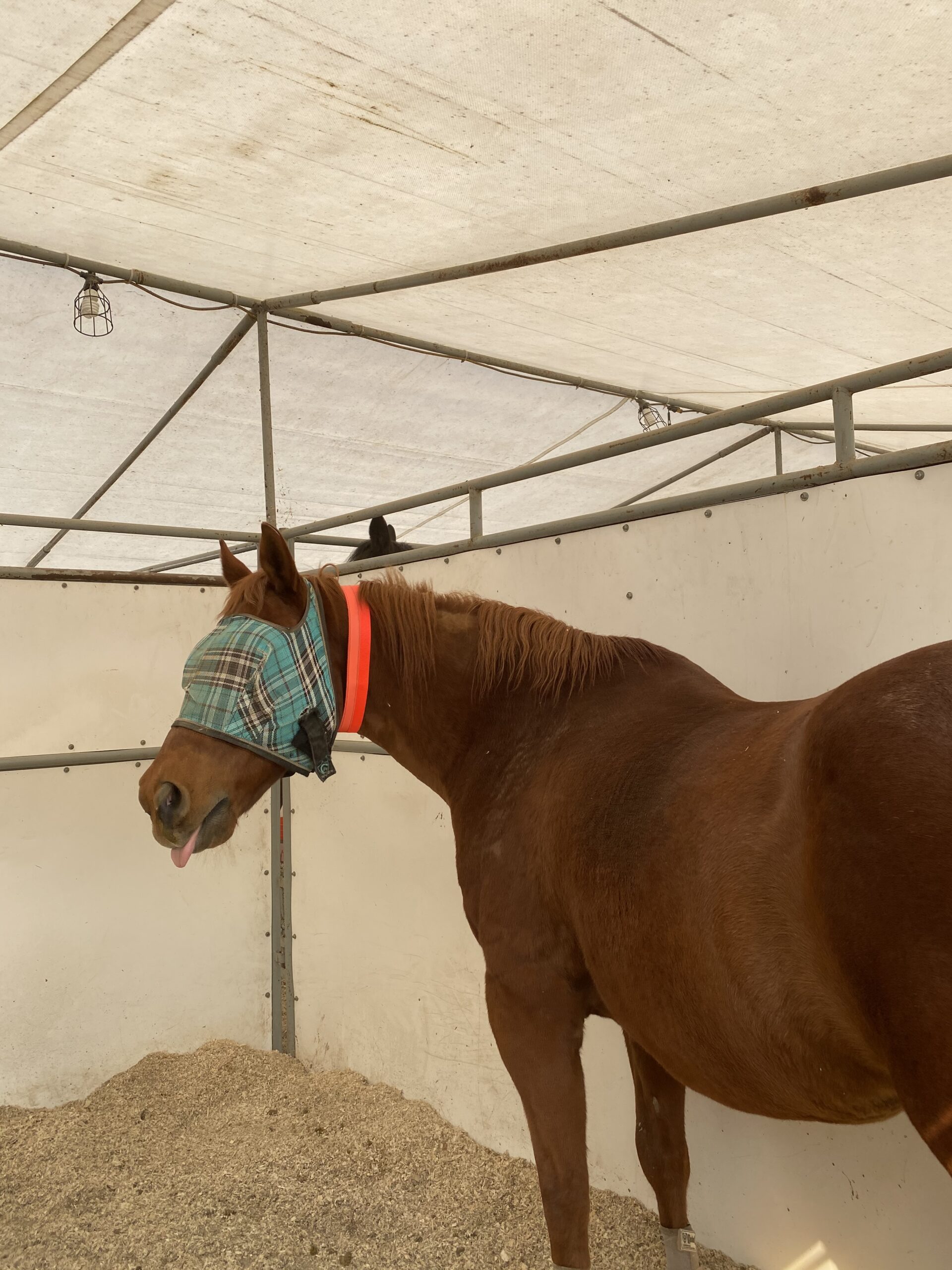
Peacock Hill evacuated horse in a stall with the EquestriSafe Multi-purpose Equine ID Collar
Emergency Equipment and Supplies for Horse Owners
For horse owners, the key to surviving a wildfire lies in the emergency equipment and supplies they have readily available. Having the right gear can significantly impact the safety of both horses and their owners.
Fire-Fighting Equipment for Barn Safety
Investing in fire-fighting equipment is a critical step in protecting your barn and horses. This includes fire extinguishers rated for barn fires, which often involve hay and other combustible materials. Ensure that all family members and staff know how to use this equipment effectively. You can have your local fire department evaluate your property and also become familiar with your property in the event of a barn fire or wildfire emergency. You can also post a map of your property layout at the gate entrance to help with the fire department also.
First Aid Kits for Equine Emergencies
A well-stocked first aid kit is essential for addressing equine injuries during a wildfire. The kit should include items like bandages, antiseptic wipes, and any medications your horses may need. It’s also crucial to have a guide on equine first aid.
Emergency Feed and Water Storage
In the event of a wildfire, having a supply of feed and water that can last for several days is vital. Store these supplies in a safe, accessible location. Consider using waterproof containers to protect against moisture.
Pre-Assembled Disaster Kits from EquestriSafe
For those looking for a convenient solution, EquestriSafe offers pre-assembled disaster kits. These kits are designed to provide everything you need to keep your horses safe during an emergency. They include essential supplies like food, water, and first aid materials.
Emergency Supply Description Quantity
Water Stored in waterproof containers Enough for 3-5 days
Feed Non-perishable, nutrient-rich Enough for 3-5 days
First Aid Kit Includes bandages, antiseptic wipes, etc. 1 kit per horse
Transportation Readiness for Rapid Evacuation
For horse owners, the key to safe evacuation lies in transportation readiness. When wildfires or other disasters strike, having a reliable means to transport your horses can be the difference between safety and catastrophe.
Maintaining Evacuation-Ready Trailers
Ensuring that your trailer is always ready for evacuation is crucial. Regular maintenance checks should include tire condition, brakes, and hitch mechanisms. Keep your trailer clean, organized, and stocked with essential supplies like water, hay, and first aid kits. It’s also wise to have a backup trailer in case your primary one is unavailable.
Training Horses for Emergency Loading
Training your horses to load quickly and calmly into a trailer is vital for emergency evacuations. Regular practice sessions can help reduce stress for both you and your horses during a crisis. Consider positive reinforcement techniques to encourage willing loading.
Alternative Transportation Options When You Can’t Evacuate Yourself
In situations where you’re unable to evacuate your horses personally, having alternative transportation arrangements can be lifesaving. This might include partnering with a trusted neighbor or fellow horse owner who can assist, or contacting local equine evacuation services if available.
Community Evacuation Resources
It’s essential to be aware of community evacuation resources, such as local animal evacuation centers or services that provide transportation for horses. Contact local authorities to learn more about the resources available in your area and how to access them during an emergency.
By focusing on transportation readiness, you can significantly enhance your ability to evacuate your horses safely and efficiently during a wildfire or other emergencies.
Establishing Safe Evacuation Locations
Identifying safe evacuation locations is a critical component of wildfire disaster preparedness for horse owners. When wildfires threaten, having a well-planned evacuation strategy can be lifesaving.
Identifying Temporary Shelter Options
Horse owners should research and identify temporary shelter options in their area. This includes neighboring facilities, local fairgrounds, and equestrian centers that can accommodate horses during emergencies.
Agreements with Neighboring Facilities
Establishing agreements with neighboring facilities is crucial. These agreements should outline the terms of emergency shelter, including the capacity to accommodate horses, available resources, and any specific requirements.
Working with Local Fairgrounds and Equestrian Centers
Local fairgrounds and equestrian centers often serve as evacuation sites. Horse owners should familiarize themselves with these locations, their capacity, and the services they offer during emergencies.
EquestriSafe’s Evacuation Site blog
EquestriSafe’s Evacuation Site blog is a valuable resource for horse owners. This network provides a list of verified evacuation sites across the country, making it easier to find safe locations during wildfires.
Evacuation Site Features Fairgrounds Equestrian Centers Private Facilities
Capacity for Large Animals Yes Yes Varies
Emergency Supplies Basic Advanced Varies
Veterinary Services No Yes Varies
Wildfire Disaster Preparedness Training for Horse Handlers
Disaster preparedness training for horse handlers is not just beneficial, it’s essential for saving lives. As wildfires continue to pose a significant threat to equestrian communities, having a well-trained team is crucial for effective emergency response.
Teaching Staff and Family Emergency Protocols
It’s vital to educate all staff members and family on emergency protocols. This includes understanding the warning signs of an impending wildfire, knowing the evacuation routes, and being aware of the procedures for assembling and loading horses quickly.
• Conduct regular training sessions to ensure everyone knows their role.
• Use clear, concise language and visual aids to help reinforce the information.
• Ensure that all staff members understand the importance of their participation in emergency preparedness.
Conducting Regular Evacuation Drills
Regular evacuation drills are critical for preparing both handlers and horses for emergency situations. These drills help identify potential issues in the evacuation plan and provide an opportunity to address them before an actual emergency occurs.
1. Schedule drills at least twice a year, or more frequently if possible.
2. Debrief after each drill to discuss what went well and what needs improvement.
3. Adjust the evacuation plan as necessary based on the outcomes of the drills.
Preparing Horses for Unfamiliar Handlers
In emergency situations, horses may need to be handled by people they don’t know. Training horses to be calm and responsive to unfamiliar handlers is crucial.
Tips for Preparing Horses:
• Expose horses to various handlers during training sessions.
• Practice loading horses into trailers with different people.
• Reward calm behavior to reinforce positive responses.
Reducing Horse Anxiety During Emergencies
Reducing anxiety in horses during emergencies can significantly impact their safety and the safety of their handlers. Techniques such as maintaining a calm environment, using familiar commands, and having a consistent handler can help.”The key to managing horse anxiety is preparation and consistency. By training horses to respond to commands in a calm and predictable manner, handlers can reduce the risk of panic during emergencies.” – Equestrian Safety Expert
For more tips on reducing horse anxiety, visit https://equestrisafe.com/.
Property Modifications to Reduce Wildfire Risks
To safeguard your equine property against wildfires, consider implementing key modifications. These adjustments can significantly reduce the risk of damage to your property and help protect your horses.
Creating Defensible Space Around Barns and Pastures
Creating defensible space is crucial in reducing wildfire risks. This involves clearing flammable vegetation, debris, and other combustible materials around barns, pastures, and other structures. By doing so, you create a barrier that can help stop or slow the spread of wildfires.
Fire-Resistant Building Materials and Designs
Using fire-resistant building materials and designs can also mitigate wildfire risks. Consider using materials like metal roofing, fire-resistant siding, and non-combustible fencing. These materials can help protect your property from igniting during a wildfire.
Water Storage and Delivery Systems
Having adequate water storage and delivery systems is vital for fighting wildfires. Ensure you have sufficient water storage tanks and a reliable means of delivering water to areas where it’s needed. This can include hoses, sprinklers, and other firefighting equipment.
Property Assessment Services contact your local fire or forestry department in your area.
For personalized guidance on reducing wildfire risks, consider consulting with professionals. Contact EquestriSafe at 877-600-1375 for property assessment questions and guidance for your specific needs.
When You Can’t Evacuate: Last Resort Options
For horse owners facing wildfires, having a last resort plan is crucial when evacuation isn’t feasible. This plan involves several critical components to ensure the safety of both horses and owners.
Aluminum Reflective “Shelterin in Place” Farm or Ranch Sign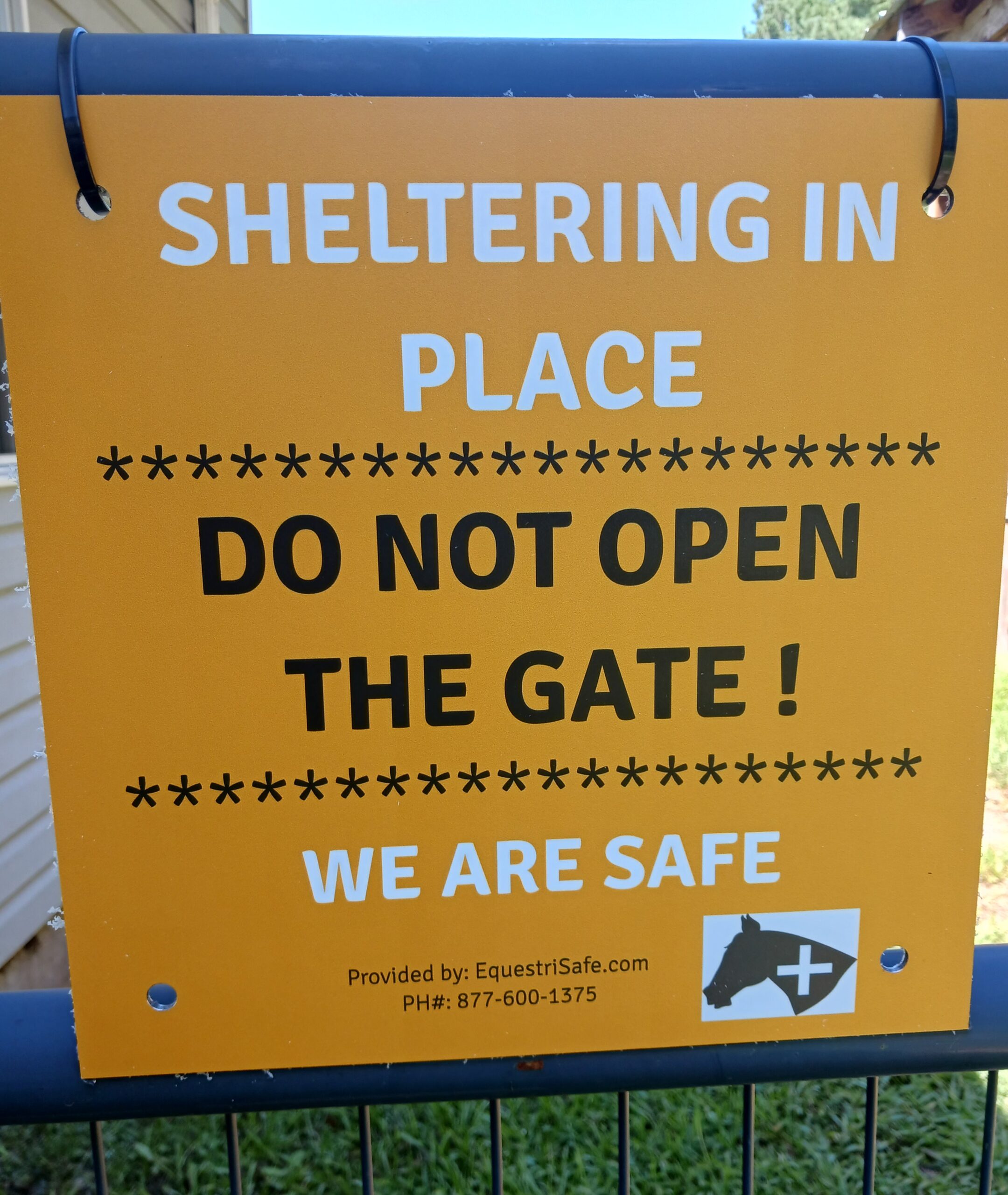
Safe Release Protocols if Evacuation Becomes Impossible
If evacuation is not possible, and you have defensible space, sheltering in place can be your best option. Giving emergency responders notification can be as easy as obtaining the “Sheltering in Place” placard from EquestiSafe is a great option. EquestriSafe does not advocate releasing horses, and should only be considered as a last resort. This decision should not be taken lightly, as it involves significant risks to both the horses and the community. Safe release protocols involve identifying safe areas where horses can be released without being trapped by the fire or causing harm to others, first responders, and emergency traffic and vehicles.
Creating Fire-Resistant Safe Zones on Your Property
Creating fire-resistant safe zones on your property can provide a safer area for horses during a wildfire. This involves clearing flammable vegetation, using fire-resistant materials for fencing and barns, and ensuring adequate water supply for firefighting efforts.
What to Do if You Must Leave Horses Behind
Leaving horses behind is a difficult decision, but in some cases, it might be unavoidable. Ensuring that your horses are properly identified and that you have a plan for their care in your absence is crucial. Notifying emergency responders that your animals will be sheltering in place is important. Emergency decision-making guidelines can be found on resources like Equestrian Safety, which provide valuable information for horse owners.
Emergency Decision-Making Guidelines
When making emergency decisions, consider the safety of both humans and animals. Assess the situation carefully, and prioritize actions that minimize risk. Stay informed about the wildfire’s progression and follow instructions from local authorities.
Post-Disaster Recovery and Returning Home
Returning to your horse property after a wildfire disaster demands a thorough assessment. The recovery process involves multiple steps to ensure your safety and the well-being of your horses.
Assessing Property Safety Before Returning
Before entering your property, check for any hazards such as fallen power lines, sharp debris, and structural damage to barns and fences. Ensure that it’s safe to approach your property and that no immediate dangers are present.
Checking Horses for Smoke Inhalation and Injuries
Upon returning, inspect your horses for signs of smoke inhalation, burns, or other injuries. Look for symptoms such as coughing, difficulty breathing, or visible wounds. If you suspect any serious health issues, contact your veterinarian immediately.
Dealing with Contaminated Water and Feed
Wildfires can contaminate water sources and feed with ash, debris, and harmful chemicals. Assess the condition of your water supply and hay storage. If contaminated, consider alternatives or treatment options to ensure the health and safety of your horses.
EquestriSafe Recovery Resources
For additional support during the recovery process, consider utilizing resources from EquestriSafe. Their comprehensive guide provides valuable information on managing your horse property after a disaster. Visit https://equestrisafe.com/ for more details.
Recovery Task Action Required Resources Needed
Assess Property Safety Inspect for hazards, structural damage Personal Protective Equipment, Inspection Checklist
Check Horse Health Inspect for smoke inhalation, injuries Veterinary Care, First Aid Kit
Manage Contaminated Resources Assess water and feed quality Water Testing Kits, Alternative Feed Sources
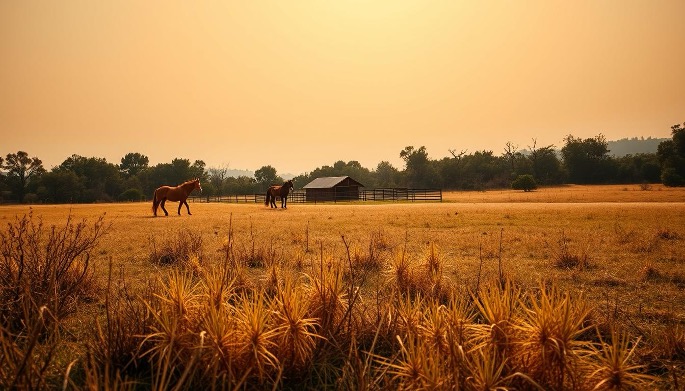
Conclusion: Being Prepared Saves Equine Lives
As a horse owner, being prepared for wildfires is crucial to safeguarding your equine companions. Developing a comprehensive disaster preparedness plan is essential to ensure their safety. This guide has provided you with the necessary steps to create an effective emergency preparedness strategy, from assessing your property’s vulnerability to establishing safe evacuation locations.
A well-structured preparedness plan can make all the difference in saving equine lives. By identifying potential risks, creating evacuation routes, and maintaining essential documentation, you can respond quickly and effectively in the face of a wildfire. Remember to regularly review and update your plan to ensure it remains relevant and effective.
For more information on disaster preparedness and to access resources from EquestriSafe, call 877-600-1375 or visit https://equestrisafe.com/. By taking proactive steps towards disaster preparedness, you can help protect your horses and ensure their safety during emergency situations.
FAQ
What is the most important step in creating a wildfire disaster preparedness plan for my horses?
Assessing your property’s vulnerability to wildfires is crucial. This includes identifying potential fire hazards, creating defensible space, and having a plan in place for emergency evacuations.
How can I identify my horse in an emergency situation?
Consider microchipping your horse, using EquestriSafe identification products and ID tags, and keeping a recent photo of your horse. You can also use a lead rope with identification information attached.
What essential documentation should I have for my horses?
Keep up-to-date veterinary records, ownership documents, and insurance papers. Consider creating digital backups and storing them securely.
What emergency equipment and supplies should I have on hand?
Have a first aid kit, fire extinguishers, and emergency feed and water storage. Consider purchasing a pre-assembled disaster kit from EquestriSafe.
How can I prepare my horse for emergency loading into a trailer?
Train your horse to load into a trailer calmly and quickly. Regularly practice loading and unloading to reduce stress during an emergency.
What should I do if I need to evacuate my horses but can’t accompany them?
Identify alternative transportation options, such as a trusted neighbor or professional horse transport service. Make sure they have the necessary contact information and documentation.
How can I reduce the risk of wildfires on my property?
Create defensible space around barns and pastures, use fire-resistant building materials, and implement water storage and delivery systems.
What should I do if I’m unable to evacuate my horses and a wildfire is approaching?
Follow safe release protocols, create fire-resistant safe zones on your property, and follow emergency decision-making guidelines.
How can I check my horses for injuries after a wildfire?
Check for smoke inhalation, burns, and other injuries. Consult with a veterinarian as soon as possible to assess your horse’s health.
Where can I find more resources on wildfire disaster preparedness for horse owners?
Contact EquestriSafe at 877-600-1375 or visit https://equestrisafe.com/ for more information and resources on disaster preparedness.