Do horse owners really need to know their horse’s vital signs?
As horse owners, we all want to keep our equine partners safe, healthy and thriving. But on question often comes up: Do horse owners really need to know their horses’ vital signs? Absolutely – yes. Every horse owner should understand their horse’s normal vital signs and how to assess them in an emergency. Knowing this information can make a difference between a manageable situation and a life-threatening crisis. The reasons why are more important today than ever. Let’s take a look at some of the information you should know.
Why Learning Equine Vital Signs Matter:
Recognizing abnormal temperature, pulse, respiration and gut sounds allow you to:
- Identify emergencies early
- Communicate clearly with your veterinarian
- Provide immediate first aid while waiting for professional help
- Make informed decisions during colic, injuries, or sudden illness
Understanding your horses’ normal vital signs isn’t just “nice to know.” It’s a critical part of responsible horse/mule ownership. When and emergency happens – and it will at some point – being able to quickly assess your horse’s condition can:
- Help to recognize early signs of distress
- Provide essential information to your veterinarian
- Potentially save your horse’s life
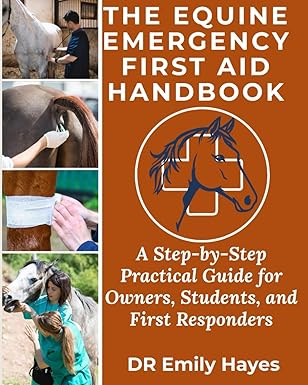
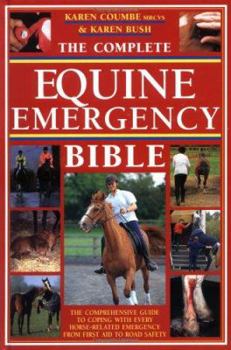
There are several equine first aid books available from authors and reputable equine-care sources. These guides cover everything from cuts and puncture wounds to colic, shock and other A to Z emergencies. They can help you evaluate your horse’s condition and take appropriate action before your veterinarian arrives. There are resources where you can learn either online or in-person, and we can look at these below.
Hands-on Learning: Equine First Aid Courses
If you prefer hands-on learning, Equi-First Aid USA offers in-person classes across the country. These courses teach practical skills such as:
- Taking accurate vital signs
- Bandaging wounds correctly
- Recognizing and responding to colic
- Stabilizing a horse until veterinary help arrives.
Online options – like Equine First Aid Course: Learn Essential Emergency Care for Horses – provide flexible learning for owners who want to build confidence from home.
The Growing Shortage of Equine Veterinarians
Recent reports highlight a significant shortage of equine veterinarians especially in rural America. With fewer large animal vets available, horse owners must be prepared to handle emergencies responsivity and respectfully.
This decline in the number of equine veterinarians means:
- Longer wait times during emergencies
- Greater distances to equine hospitals or university clinics
- Increased pressure on the veterinarians who remain
Veterinarians are highly trained professionals, and unfortunately, many leave the field due to:
- Abusive or disrespectful client behavior (verbal or physical)
- Unrealistic expectations
- Chronic disregard for professional guidance
- Non-payment for services
- Being contacted only during emergencies
With fewer professionals available, it’s more important than ever for horse owners to be prepared – and to treat veterinarians with the respect they deserve.
Here is a recent article from: The Equine Institute
Why Your Knowledge Matters More Than Ever
With fewer equine vets and greater distances between emergency hospitals or university clinics, your ability to prove accurate information is critical. When you can confidently report your horse’s vital signs, symptoms, and timeline, you help your veterinarian:
- Assess the urgency of the situation
- Prioritize travel during emergencies
- Give immediate instructions over the phone
- Prepare the right equipment before arriving
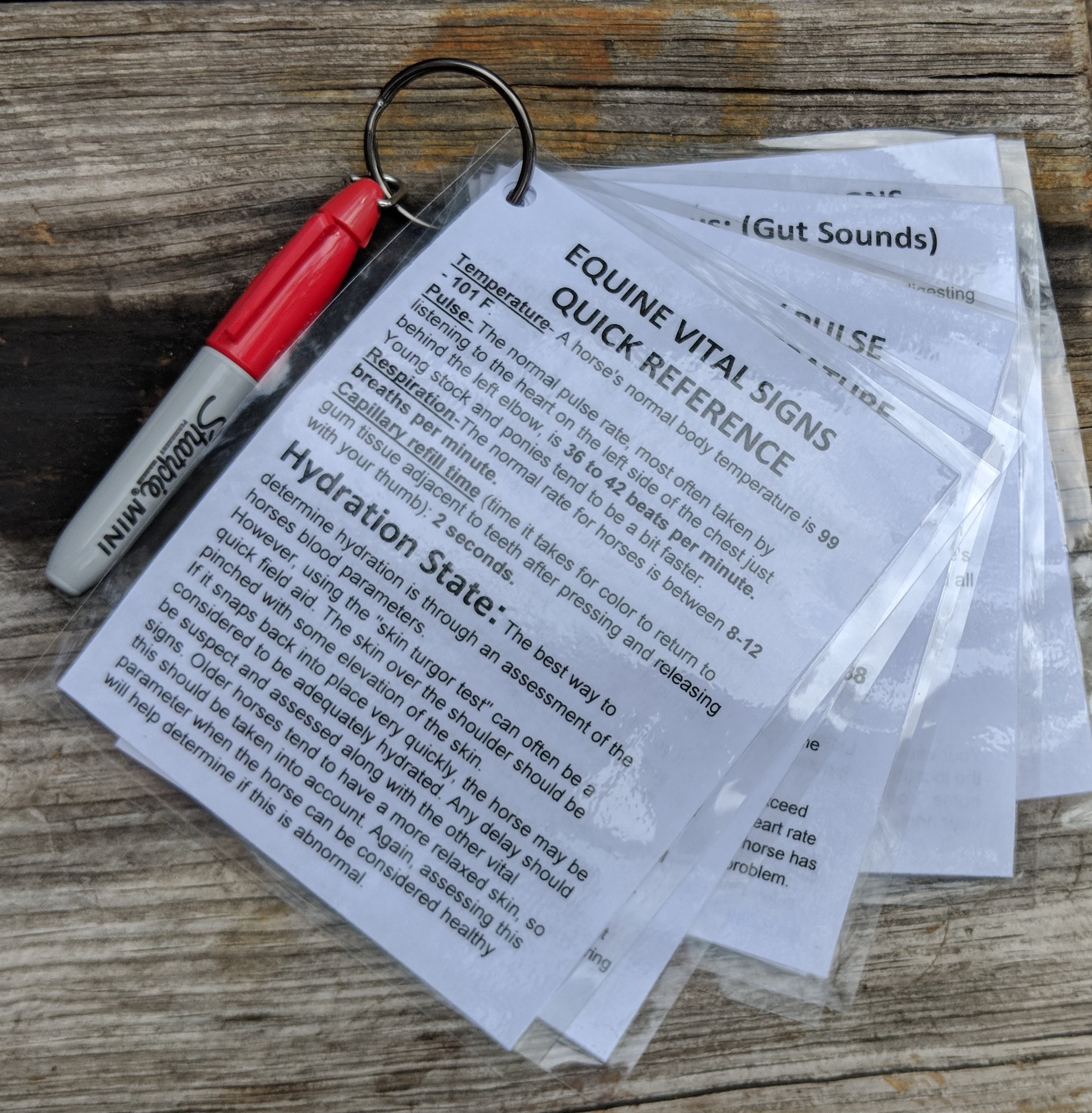
In an emergency, every minute counts – and your knowledge can directly impact your horse’s outcome. Having a handy small guide in will help you when panic begins to set in and that where the EquestriSafe Quick Reference guide can help.
EquestriSafe developed their Quick Reference Guide with the help of veterinarians to provide vital information for horse owners. It provides 6 pages of vital signs information:
- Equine Temperature
- Respiration
- Heart Rate/Pulse
- Gut Sounds
- Mucus Membrane refill
- Current Vital signs page
This guide not only provides the necessary information along with how and where to record your findings.
Small enough for:
- Saddle bags
- Emergency preparedness kits
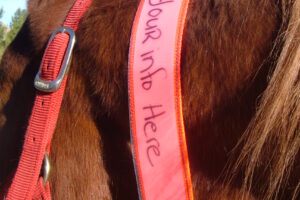
- First Aid kits (trail kits, barn kits or even in your truck or trailer)
Don’t be scared: Be prepared When Emergencies Happen.