We are often asked, “What should I do to be prepared for an evacuation?” This isn’t always easy to answer. Let’s explore some ideas that are not usually discussed and are included in the typical “evacuation preparations list”.
Most lists tell you what you should have in your to-go kit when you evacuate; but not what or how to prepare for a possible evacuation? This means that you may not always evacuate after preparing, but you were ready “just in case” and evacuation was needed whether ordered or not. Don’t be discouraged either if you prepare and don’t move. Take it as practice “for the next time”. And each time your practice in your preparations, you will get better and better. You will learn each time what you can do better, do smoother or be better prepared. I know of a few large boarding facilities that have “fire drills” at a minimum of twice a year, but some do this each quarter so that anyone new to the barn will know exactly what is expected and what it takes to move out all animals quickly and efficiently.
But honestly it doesn’t matter whether you live where wildfires can crop up in a heartbeat, live in an area where tornadoes are possible or where a hurricane may impact your farm, you need to always be aware of the possibility of an evacuation, fences being taken out or flooding. Other natural disasters may give you early warnings, whereas wildfires caused by human errors or intentional and therefore are so unpredictable. Adding to that droughts, dry vegetation, heat and wind and you’ve got a perfect storm for out-of-control fires. Fires can cause more fires when wind is added to the mix and flying debris which can contribute to “pop-up” fires many miles away from the initial incident. So, what should you do to get yourself ready for any or all of these situations?
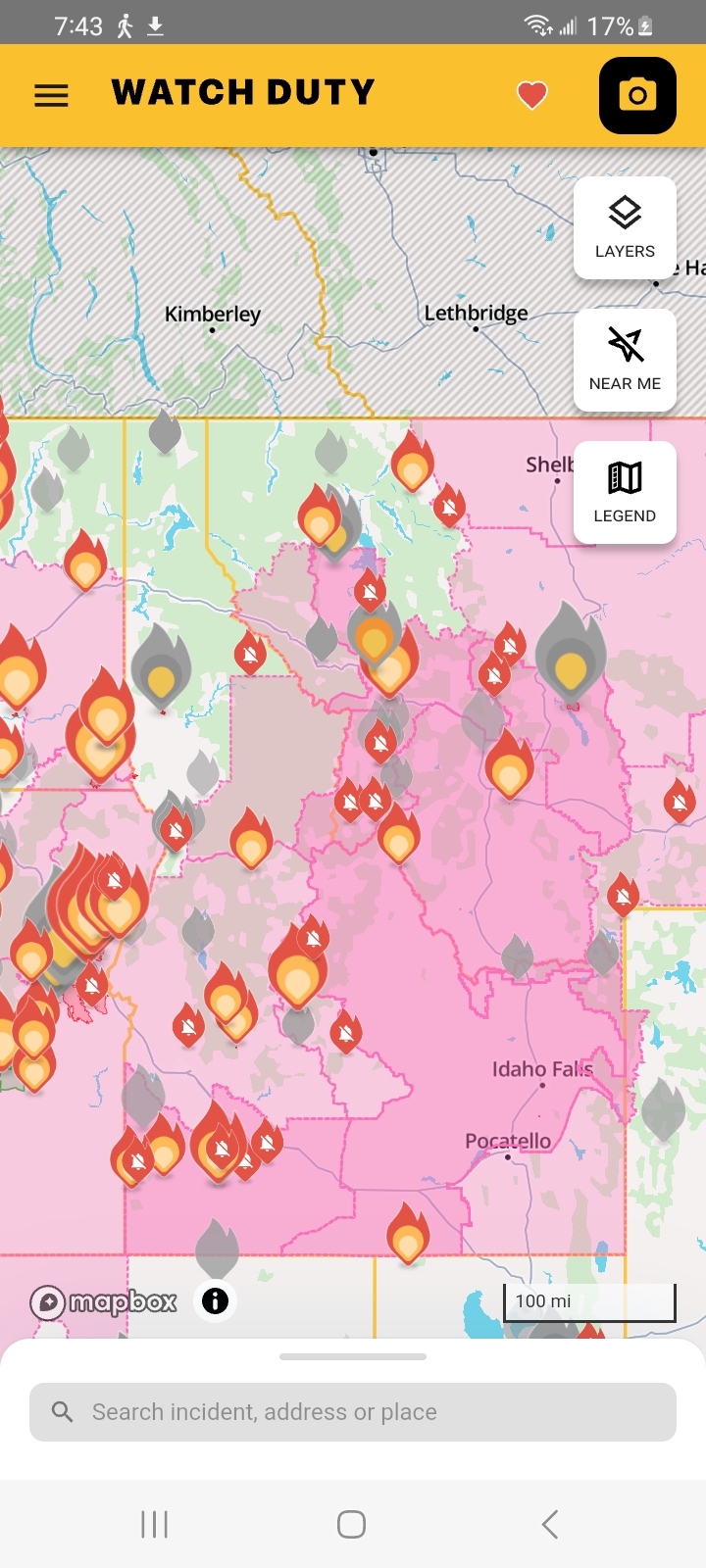
First off become familiar with your area, what types of natural disasters might affect you and your property, listen to weather reports and beware of activity in your area that may cause an evacuation. In the below picture you can see an extensive area of “pink” which happens to be a Red Flag warning area. And the flames show current activity of fires where the grey color represents fires that have been contained. But what do Red Flag warnings mean to you?
What is a Red Flag warning? The weather service issues a Red Flag warning when there is an increased risk of fire danger because of warm temperatures, low humidity and strong winds. It’s especially important for fire managers and officials – Red Flag warnings let them know to stop any planned burns and keep an eye out for wildfires.
Get ready, be prepared to evacuate because if a fire starts, it will probably move fast and unpredictably.
Here are a few tips:
** Hook up your truck & trailer facing out of your property
** Bring your horses close to the barn or house
** Have your halters ready
** Remove flammables from your truck & trailer
** Load extra feed & water buckets
** Load supplements and medications for yourself and all your animals (dogs, cats, horses, etc.)
** Have Identification for all animals as well.
Examples might be:
** Collars with telephone numbers for all dogs and cats
** Equine ID Collars and/or Fetlock ID Bands for all equines, goats, sheep, llamas or even pet cattle with your contact information.
** Small animals in crates, you should have your contact information zip-tied to the crate easily readable. You might want to have it laminated as well.
** Proof of ownership for all animals and especially equines. Photographs of all animals will assist in finding misplaced animals also. So be sure to take them with yourself in the picture along with pictures, front, back and both sides, as well as any special markings they may have which are distinctive.
** Identify and know where you will evacuate: whether it’s to another barn location, fairgrounds, racetrack for other location that will be safe in your area.
Look into the “Watch Duty” app for your phone and download it for your area.
Don’t be scared: Be prepared
For those in areas with possibilities of tornadoes, hurricanes or flooding, we’ve got the answers for you as well. For most of these areas you should receive some sort of warning. Whether it be an immediate warning from sirens, news or a weather app; most of us have one of these at our access.
With the severe weather, you should do the following to prepare:
** Bring your horses close to the barn or house
** Have halters (preferably leather with cotton lead ropes) ready and put identification on all your equines
** Load extra feed and water buckets in your trailer so if you have to leave you can do so quickly
** Load supplements, medications for all animals, yourself and other animals (dogs, cats, rabbits, birds, etc.)
** Proof of ownership for all equines
Next you will want to identify where you will be evacuating. If you have questions about that, contact your local Animal Control, ASPCA, Sheriff’s office or other agency that can help with the information. It’s so important to know where you can take both small and large animals. Usually, they are different locations, and you sure don’t want to get caught on the road without a direction. That is and can be very dangerous for you and your animals.
Having these important telephone numbers in your telephone helps with being prepared.
If you assist in evacuations and even if you are evacuating yourself, be sure to have gloves, a hat and a bandana to help if inhaling smoke. Don’t forget water, food and medications for yourself and others who may be helping. (There is more information we can explore with another article on removing animals from owners and property along with offering to take in evacuees to your own property or evacuation centers)
If you do not have any of our EquestriSafe Equine Identification items, you can always use a permanent marker on your halter and horses’ rump to put your telephone number on your horse.
Whatever you do, have several different ways to identify your horses, pictures, microchip, visible identification, ownership papers, veterinarian records at the minimum.
Be prepared before the next emergency happens and don’t be scared: be prepared.