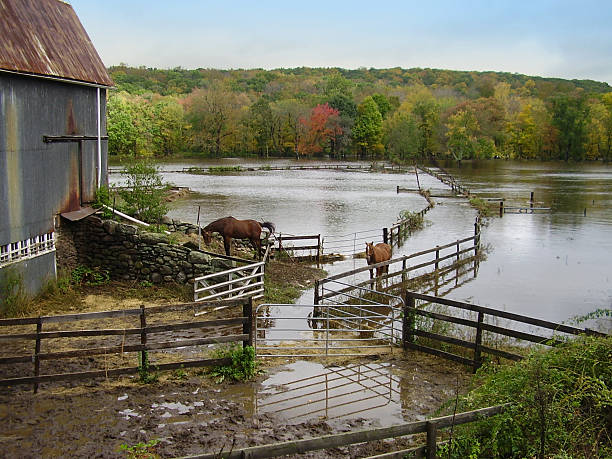
Of all of the natural disasters, floods are among the most unpredictable and devasting for horse owners. They pose a unique set of challenges that most other natural occurrences do not, such as physical dangers to logistical chaos, floodwaters can quickly turn into a life-threatening situation for equines. Understanding the risks and preparing for identification and recovery are critical steps in safeguarding yourself and your horses.
Some of the hazards horses face in floodwaters (even in shallow water) are:
Swift Currents and drowning risk
• Horse may panic and attempt to cross fast-moving water.
• Strong currents can sweep them off their feet, leading to exhaustion or drowning.
Hidden Debris and injuries
• Often floodwaters conceal sharp objects, such as fencing, fallen branches or other items.
• These can cause lacerations, puncture wounds, or even broken limbs.
Contaminated Water
• Contaminants such as sewage, chemicals or even dead animals.
• Ingestion or skin contact can lead to infections, colic, or toxic reactions due to open wounds and skin scrapes.
Displacement and Separation
• Horses may be swept away or escape corrals or pastures from broken fence boards, bent panels or even washed away fencing.
• Once horses are loose, you know that they may be difficult to recover.
Stress and Trauma
• The chaos of flooding can cause long-term behavioral issues
• Horses may exhibit PTSD-like symptoms after the trauma of being through an event such as flooding, fire or other natural disasters.
Let’s talk about ways that are essential for identifying horses so that they can be reunited with their owners and ensure medical care is administered promptly.
Permanent Identification
Method Description Pros Cons
Microchipping Implanted under the skin Reliable, Requires
with unique ID number scannable scanner
Freeze Branding Branding with a chilled Iron Visible, Permanent Requires
Training
Lip Tattoos Tattoo Inside upper lip Common in the Fades over time
Racing Industry
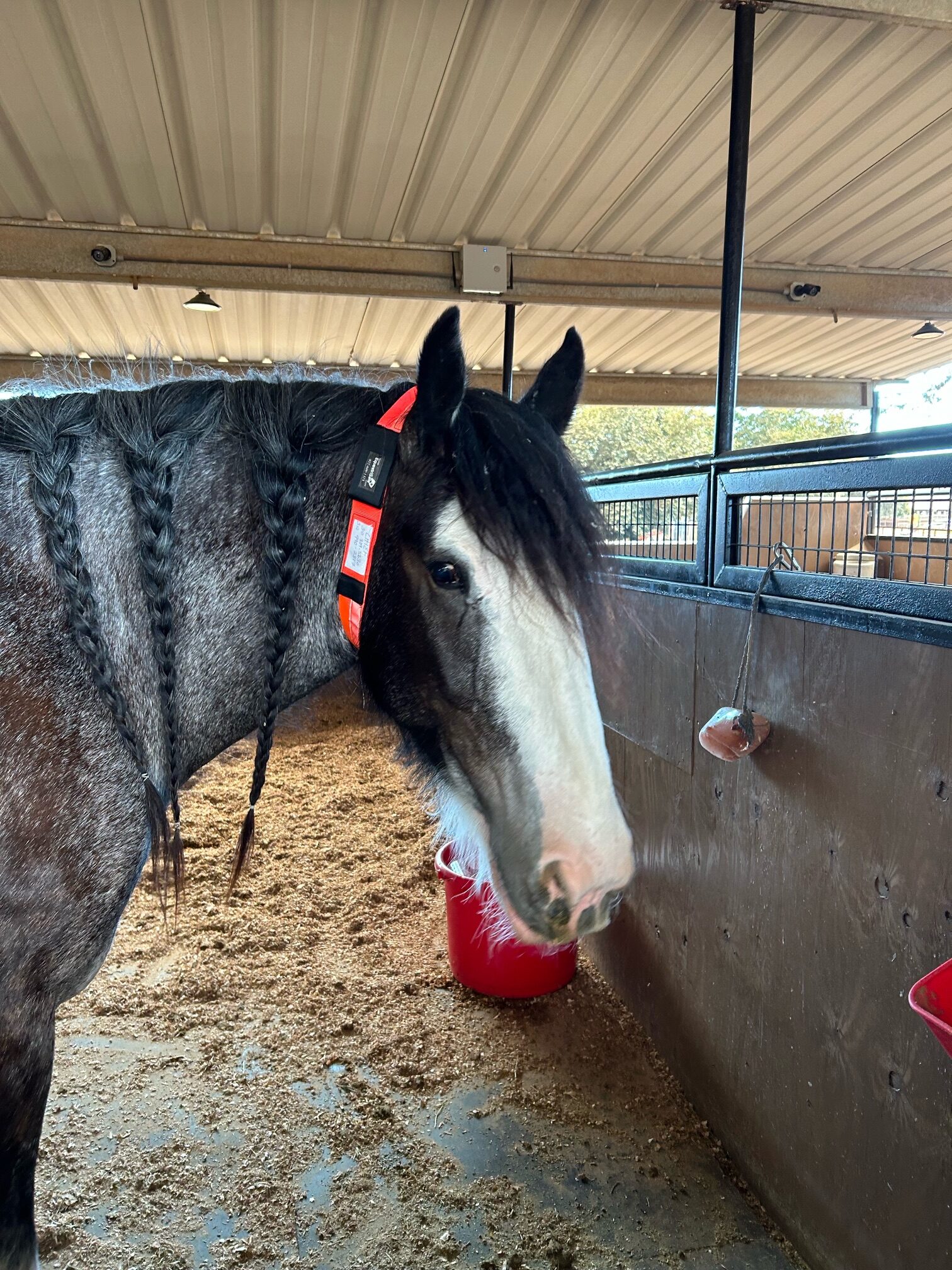
draft horse at evacuation center with EquestriSafe Equine ID collar
Temporary Identification for Emergencies
Method Description Pros Cons
ID Collars Highly visible, easy to use Easily readable Can be
waterproof Removed
Identification bands Embroided with information Immediate Requires
of the owner, waterproof notification pre-order
Luggage Tags on Write contact info (may not be Quick, Inexpensive Can fall off
halter waterproof), small easily
Spray Paint Mark ID on the coat Visible May smudge
or rub off
Photographic Records
• Keep updated photos showing markings, scars, brands and conformation.
• Include side profiles and close-ups of unique features.
• Photograph registration paperwork, insurance policies.
What you need to do to prepare:
• Have an evacuation plan in place. Know your area, flood zones, evacuation roads to take and places where you can house your horses off property.
• When housing off property, help to reduce stress by housing your horses together or near each other to reduce stress.
• Have emergency kits readily available to include: Halters and lead ropes for all horses, Identification for all animals, feed, water, first aid kits, supplements and medications.
• Help to share information on social media of evacuation sites, local shelters and vet clinics
• Become involved – contact your local evacuation groups, ASPCA or other organizations that help with rescuing, removing horses to evacuation centers.
EquestriSafe encourages all horse owners to take proactive steps to protect their animals. In times of crisis, clear visible identification can mean the difference between reunion and permanent loss. Using EquestriSafe Identification items and having an evacuation plan for not only incidents of flooding, but including wildfires, tornado activity and hurricane events.
For more information, you can download the Free 26-page evacuation booklet offered by EquestriSafe on their website at www.EquestriSafe.com